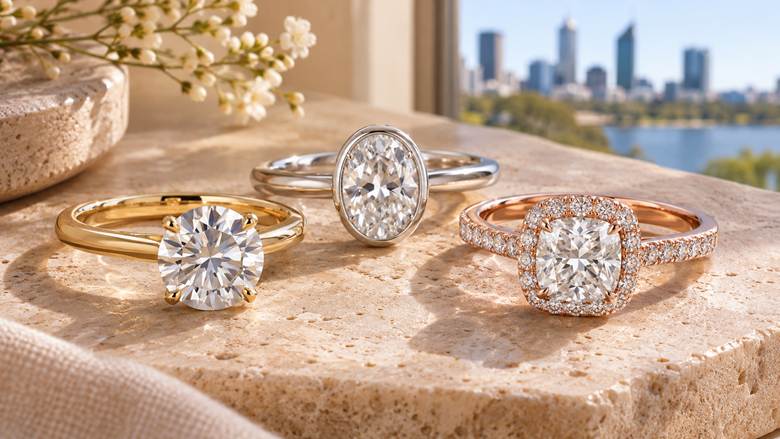
A diamond ring can look beautiful in a photograph and still feel awkward when worn every day. A raised setting might catch on clothing, a thin band may feel less substantial than expected, or a striking diamond shape may not suit the wearer’s usual jewellery.
These details are easy to overlook during an engagement ring search. Yet they often matter more over time than the first impression of a sparkling stone.
For couples comparing lab grown engagement rings in Perth, the choice now extends well beyond carat weight. Diamond shape, setting design, precious metal and comfort all deserve attention. The right combination should feel personal without making ordinary activities unnecessarily difficult.
Personal Style Is a Better Starting Point Than Diamond Size
Someone who wears understated jewellery may prefer a solitaire with a plain band. Another person might love vintage-inspired details, decorative shoulders or a halo of smaller stones.
Neither choice is automatically better. The important question is whether the ring feels like something its owner would naturally choose.
Wardrobe preferences can offer useful clues. Minimalist clothing often works well with clean lines and simple settings. Those who enjoy romantic or vintage fashion may be drawn to milgrain edges, floral details and more elaborate designs.
An article exploring fashion preferences and diamond ring styles also considers how classic, modern and vintage tastes influence jewellery choices. It provides a useful starting point for people considering man made diamonds and looking for a design that suits their personal style.
However, appearance is only part of the decision. A ring worn during work, travel, shopping and everyday activities needs to feel comfortable as well as attractive.
What Laboratory-Grown Diamonds Actually Offer
Laboratory-grown diamonds are real diamonds produced under controlled conditions rather than formed naturally underground.
According to the Gemological Institute of America, they have essentially the same chemical composition, crystal structure and physical properties as natural diamonds.
Two main production methods are used. High Pressure High Temperature (HPHT) recreates conditions of intense pressure and heat, while Chemical Vapour Deposition (CVD) builds diamond material from carbon-containing gases.
The difference in origin does not mean every laboratory-grown diamond looks identical. Individual stones vary in their proportions, colour, clarity and overall appearance.
When comparing options, buyers should examine the traditional four Cs:
- Cut: How well a diamond’s proportions and finishing influence its light performance.
- Colour: The amount of visible body colour in a diamond.
- Clarity: The presence and visibility of internal or external characteristics.
- Carat: The diamond’s weight, which is not the same as its face-up size.
An independent laboratory report can help identify the stone and provide information about its characteristics. Buyers should check exactly what the report covers and whether any treatments have been disclosed.
The Setting Can Matter More Than an Extra Carat
A diamond setting affects the appearance, height and security of an engagement ring.
For people who regularly wear gloves, work with their hands or prefer jewellery that sits closer to the finger, the ring’s profile deserves particular attention.
Prong Settings for a Traditional Look
Prong settings hold the diamond using small metal claws. They are common in solitaire engagement rings because they leave much of the centre stone visible.
A well-made prong setting can be secure, but the claws should be checked periodically. Higher settings may also catch on fabric or other objects more easily than lower-profile designs.
Bezel Settings for a Smooth Finish
A bezel setting surrounds the diamond with a rim of precious metal.
Its smooth outline can appeal to people who dislike exposed claws. It can also help protect vulnerable edges, although no setting makes a diamond completely damage-proof.
Bezel settings work especially well with oval, round and emerald-shaped stones when the overall proportions are carefully designed.
Halo and Pavé Settings for Extra Detail
Halo designs place smaller diamonds around a centre stone, while pavé settings feature small diamonds along the band.
Both add visual interest. However, they also introduce additional stones and settings that may require maintenance over time.
Buyers should inspect the finishing and ask whether the design can be resized without disturbing decorative details.
Diamond Shape Changes the Character of a Ring
The diamond’s outline has a strong influence on the finished design.
Round brilliant diamonds suit many traditional settings and are widely associated with a classic appearance. Oval stones offer an elongated outline that can make a ring feel refined without requiring an especially elaborate band.
Emerald cuts have broad, step-cut facets and a more structured appearance. Cushion cuts combine softened corners with a distinctive shape, while pear and marquise diamonds create a less conventional silhouette.
A larger carat weight does not automatically produce a more appealing ring. Two diamonds of the same weight can look different in size depending on their dimensions and proportions.
For this reason, it is worth examining a diamond from several angles rather than relying on a single photograph.
Gold or Platinum Is More Than a Colour Decision
Metal choice can influence a ring’s appearance, weight, maintenance and long-term suitability.
Yellow gold brings warmth to a design and can complement vintage-inspired jewellery. White gold offers a cooler appearance, while rose gold has a softer pink tone.
Platinum is another option for buyers who prefer a naturally white precious metal.
Australian jewellery shoppers will commonly encounter gold described as 9ct, 14ct or 18ct. These markings indicate the proportion of gold in the alloy, not the weight of the diamond.
The right choice depends on more than purity. Alloy composition, band thickness, construction and personal preferences all affect how the ring performs.
White gold may also require rhodium replating over time to maintain its bright finish, depending on the alloy and the wearer’s preferences.
Make a Perth Jewellery Appointment Count
Online photographs are useful for narrowing down designs, but they cannot fully communicate how a ring feels on the hand.
Perth buyers can compare styles online before arranging to inspect suitable designs in person. Novita Diamonds’ lab grown diamond rings Perth selection is one starting point for exploring laboratory-grown options, alongside other jewellers and their available collections.
Before making an appointment, buyers should confirm which rings or sample settings can actually be viewed.
A useful visit should involve more than examining the centre diamond. Try on different band widths and setting heights. Check whether the ring turns on the finger and whether the design feels balanced.
It is also worth discussing the wedding band early. Some engagement ring settings do not allow a straight wedding band to sit flush against them.
If a ring is being made to order, request clear information about the design approval process, expected completion period and available alterations.
The Purchase Details Deserve Equal Attention
A diamond ring can represent a substantial purchase, even when the buyer has chosen a more affordable laboratory-grown stone.
Comparing two prices only makes sense when the details are reasonably similar. Diamond characteristics, metal purity, design complexity and manufacturing quality can all affect the final cost.
Ask for a written breakdown showing what is included. A quotation should clarify whether the price covers the centre stone, setting, any smaller diamonds, resizing, delivery and applicable taxes.
Buyers should also distinguish between a retailer’s voluntary returns policy and their legal consumer rights.
Under Australian Consumer Law, consumer guarantees can apply to jewellery purchases. Products must meet relevant standards of acceptable quality and match their descriptions. These rights cannot simply be removed by a store’s warranty terms.
However, a change of mind does not automatically entitle a buyer to a refund. Custom-made purchases may also involve specific cancellation and alteration conditions, so reading the terms before ordering is sensible.
Environmental claims deserve similar care. Laboratory production does not automatically establish that every diamond has a lower environmental impact. Claims about sustainability should be supported by credible evidence rather than broad labels.
Keeping the Ring in Good Condition
Diamonds are highly resistant to scratching, but they are not immune to chipping or damage. Precious metal settings can also wear, bend or become loose.
Regular cleaning helps remove oils and residue that reduce sparkle. A jeweller can advise on suitable cleaning methods for the particular ring and inspect the security of its stones.
Removing jewellery before activities that involve heavy impact, harsh chemicals or a risk of snagging can also help prevent damage.